
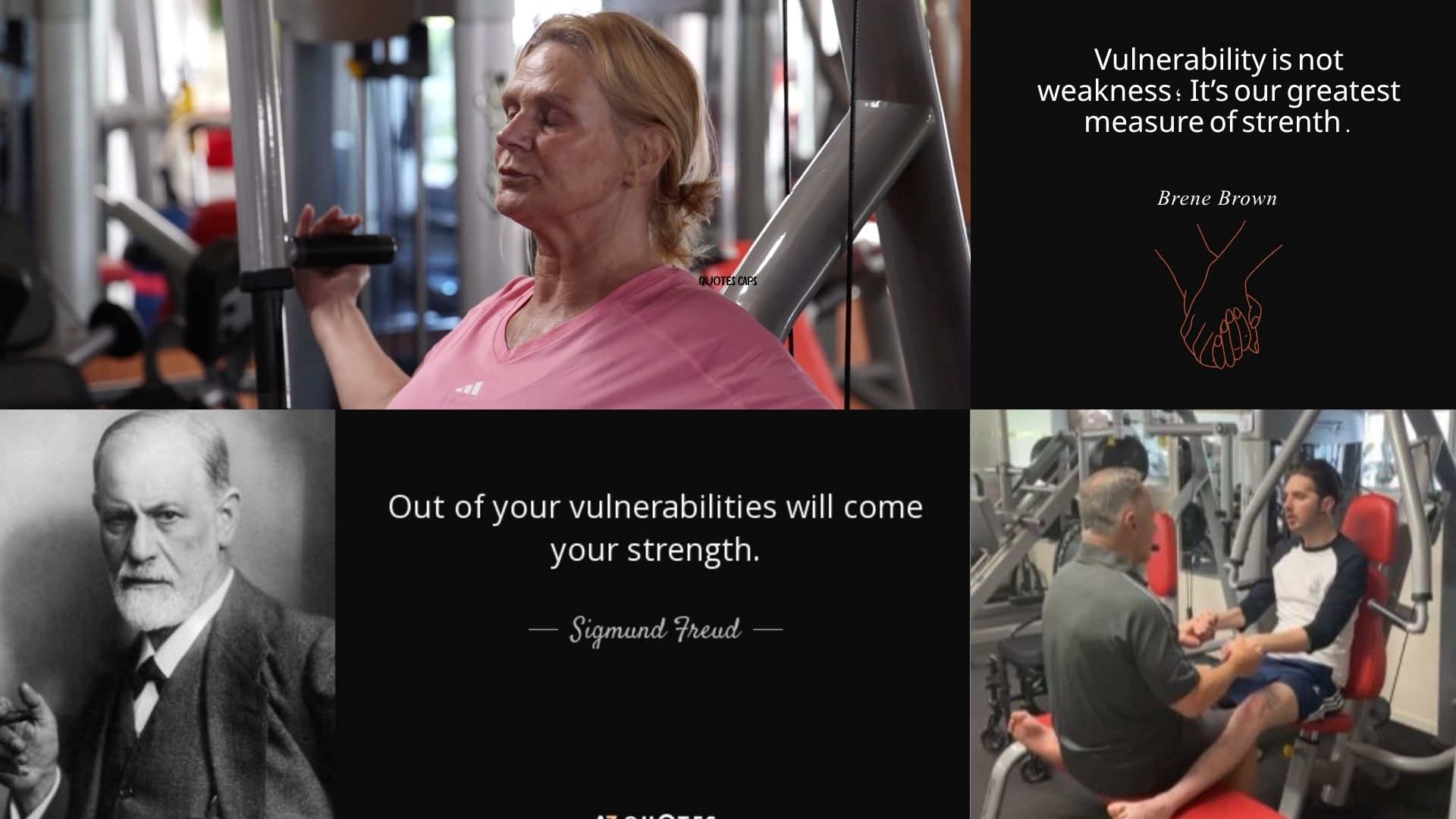
Where real strength and positive changes begin.
There comes a point in a person’s life where continuing to push harder, to try and override what they are feeling, or to keep holding everything together the way they always have, simply stops working. And when that moment arrives, it’s not because the person has failed—it’s because the strategy they have relied upon for so long has reached its limit, and something else is now being asked of them.
In my work, I see this moment very often.
People come to me from all over the world, and by the time they arrive, they have usually done everything they possibly can to get themselves well. They have pushed, they have searched, and committed themselves to countless approaches with genuine intent, and yet something still hasn’t shifted. So when they sit in front of me, I am very aware that for many of them, this is not just another attempt—this feels like their last real opportunity to take back control of their future.
That carries a great deal of responsibility.
What becomes immediately clear, however, is that these people are not weak. In fact, they are often incredibly strong in the way they have managed to keep going. They have learned to override discomfort, to suppress emotion, and to continue functioning despite what is going on underneath. But over time, that way of operating begins to organise the system around protection, and while protection is essential when it is needed, it is not a state from which the system can easily move forward and evolve.
So what I begin to guide them toward is not more effort, but a very different experience altogether.
It involves allowing themselves, often for the first time in a long time, to stop holding everything together, and to become aware of what is actually there without immediately trying to change it. And this is approached very carefully, because when a person has been holding on for so long, letting go—even slightly—can feel unfamiliar and, at times, confronting as deep underlying fears and anxieties begin to emerge.
This is where my role becomes very focused.
I will often find myself speaking very quietly, almost whispering at times, guiding them to stay with what they are feeling – embracing their emotions without retreating from them, without trying to cognitively alter anything, and without placing judgement on it. And as they begin to allow that experience to unfold, they can feel their system gradually shifting away from its constant state of guarding. What emerges in that space is what I would describe as a true state of vulnerability—not weakness, but a moment where the usual layers of defence are no longer running the show.
From there, they begin to introduce the simplest of movements, very controlled and very low in intensity, within a structured environment under my quite guidance that gives the system something stable to work with. The intention is not to override what is happening, but to allow the system to very discreetly reorganise itself toward a more open and less defensive state while grounded in vulnerable reality.
And it is important to say clearly—this is not something I do to a person. The individual is the only one who can ultimately get themselves well. My role is to simply provide the environment, the guidance, and the tools that allow them to do so.
And when a person is able to remain in that space, even for short periods of time, something begins to come through that has often been covered over for years. A sense of internal strength that is not forced, but rediscovered.
I have seen this occur thousands of times over the course of my career, and it is always the individual who creates that change. In many ways, the global reputation of NeuroPhysics Therapy has been built by the courage of the people I have had the honour of working with—people from all over the world who were willing to meet themselves at that most vulnerable level and move forward from it.
This principle is not new to me.
It is the very cornerstone of NeuroPhysics Therapy, and it evolved from my own personal experiences in the early 1980s, where I came to understand, first hand, what it means to confront oneself without defence and allow something different to emerge. That journey is shared in the documentary CALIBRATE for those who wish to understand this process more deeply.
A powerful example of this in practice is John Maclean, who after 25 years of being wheelchair dependent chose to fully engage in this process. Within four days, he took his first unassisted steps, which at the time challenged widely held views on what was possible.
Experiences like this are not about pushing harder or trying to force outcomes. They come from a very different place—one where the person is prepared to stop avoiding what is there and instead work through it in a way that allows the system to reorganise itself more effectively.
Because the reality is, if something cannot be pushed aside or overridden, it will eventually need to be worked through. Not by analysing it endlessly, but by allowing it to be experienced without suppression so that it no longer has to be carried in the same way.
And for those who are prepared to embrace their own vulnerability, they too can go onto to achieve the highest levels of performance physically and emotionally, above all of their previous expectations.
I do not take lightly the responsibility of guiding people into this space, particularly when they have placed their trust in me at such critical points in their lives. It requires a high level of focus, care, and presence, because how that moment is handled matters.
But when it is approached in the right way, vulnerability is no longer something to be avoided.
It becomes the very point from which meaningful change can begin.
And sometimes, the strongest thing a person can do is to stop holding on quite so tightly, and allow themselves—even briefly—to meet where they are, and begin again from there.
Folks I do hope that there are some take home messages in my post here for you as my words are formed from decades of real-life experiences working with the most complex of complex dis-eases and dis-orders and witnessing the most incredible life enhancing evolutions occur in very small time scales.
Please share if you feel other people would benefit from this information.
NOTE: Everything that I have described above in terms of NeuroPhysics Therapy (NPT) rationale and practices, I have been able to pass this wisdom onto my students and my NPT graduate practitioners – who are all enjoying their own successes with their clients. I will have my updated NPT training and education dedicated website up live very soon. One thing is for certain; the world needs many more NPT practitioners.